
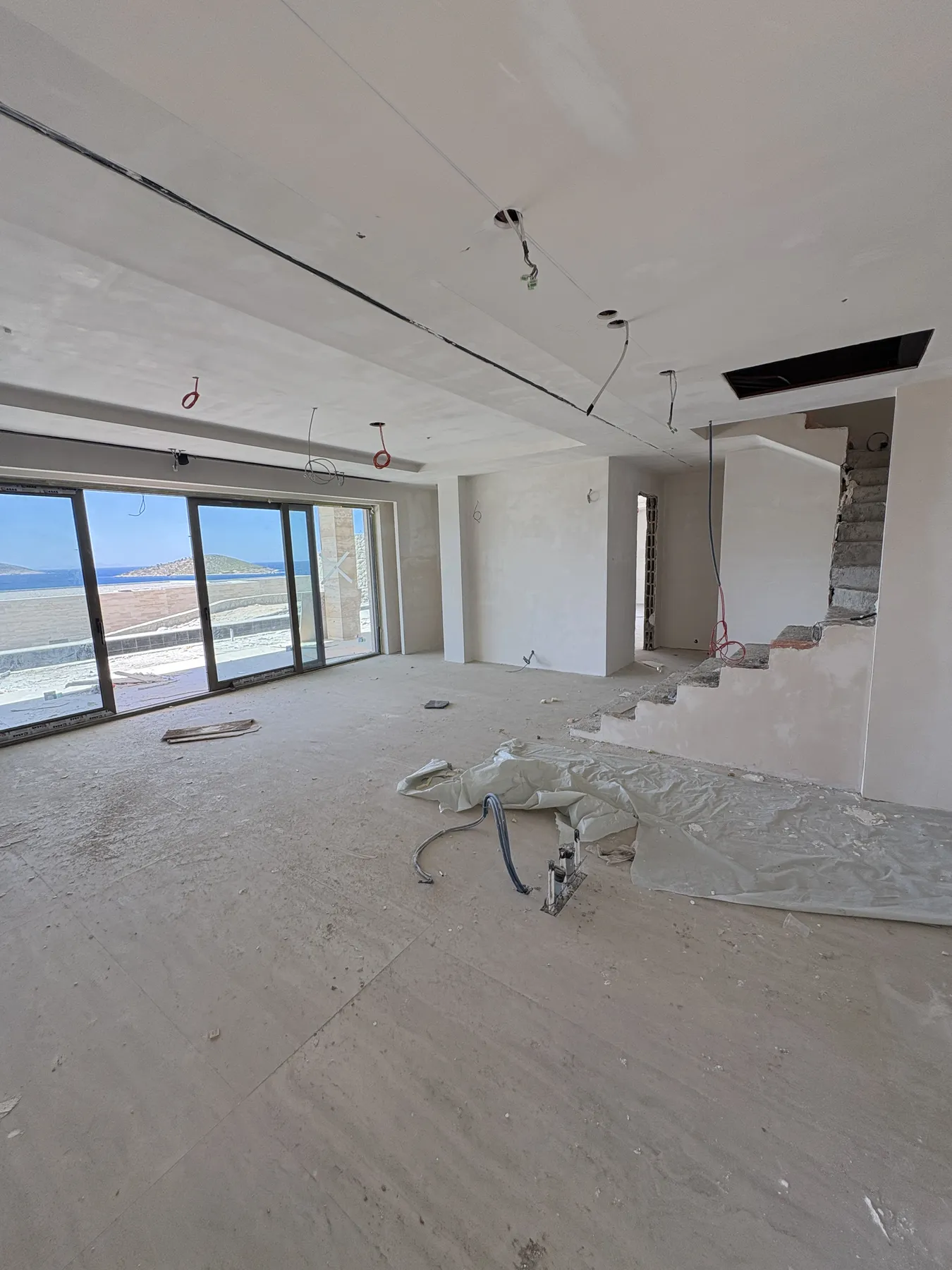
Stand on a terrace in Belek or Bodrum and the sea feels like an amenity. To a reinforced concrete frame, it is a slow chemical attack. Salt does not need a storm to do damage - it travels on humid air, settles on surfaces, and works its way inward every single day the building stands near the coast. Most of what determines whether a structure ages gracefully or crumbles at the balcony edges within a decade is decided before the first tile is laid, during the shell phase, by choices most buyers never see.
The mechanism: how salt gets to the steel
Reinforced concrete works because two materials share the load: concrete resists compression, steel rebar resists tension. The steel survives inside the concrete because the material around it is naturally alkaline, which keeps the bar passive and un-corroded. That protection depends entirely on the concrete staying intact and the steel staying covered.
Chloride ions from sea air do not respect that arrangement. They diffuse through the concrete's pore structure, and once enough chloride reaches the steel, it breaks down the passive layer. The rebar starts to rust. Rust occupies more volume than the steel it replaces, and that expansion cracks the concrete from the inside out - which is why coastal spalling so often appears as a burst patch with a rust-stained bar exposed at the centre.
Why the coast accelerates the process
Inland, concrete deteriorates mainly from carbonation - a slow reaction with atmospheric carbon dioxide that eventually lowers the alkalinity protecting the steel. It is a real process but a gradual one. On the Antalya coastline, wind-driven salt spray adds a second, faster attack that compounds the first.
Humidity plays its own role. Concrete that stays damp for long periods - shaded elevations, poorly drained balconies, north-facing walls that never fully dry - gives chloride ions a continuous liquid path to travel through. Wet-dry cycling is often worse than constant wetting or constant dryness, because each cycle draws more salt-laden moisture into the pore structure and then concentrates it as the surface dries.
Concrete quality is the first line of defence
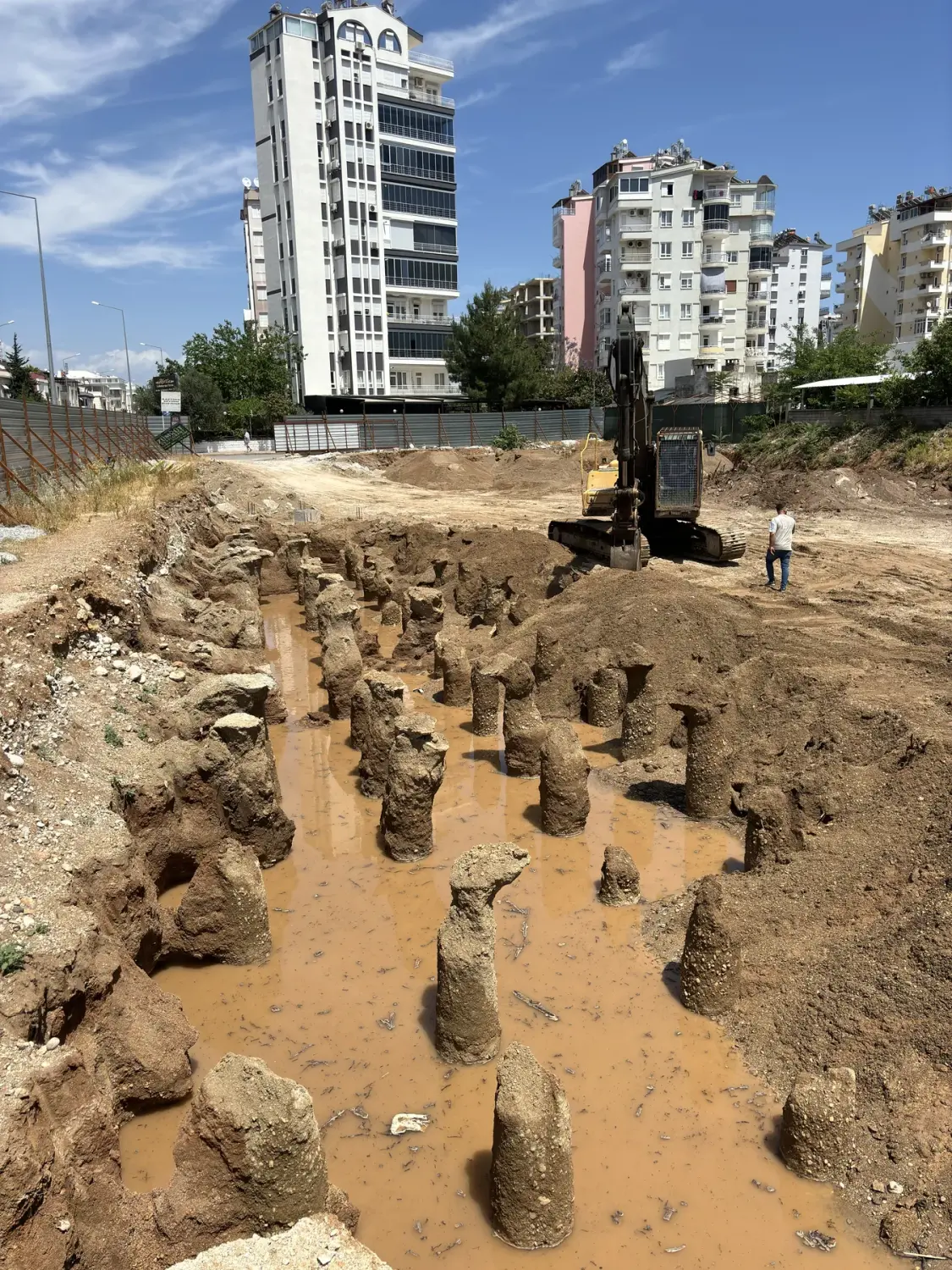
The single biggest variable in how fast chloride reaches the steel is how permeable the concrete is. Dense, well-graded concrete with a properly controlled water content and adequate cement content resists chloride penetration far longer than a leaner, more porous mix. This is decided at the batching plant and confirmed on site, not adjusted later.
We specify mix designs for coastal shells differently from inland ones, and we test them - slump, strength, sometimes durability indicators depending on the project's exposure class. A mix that looks identical on a delivery ticket can perform very differently in service depending on how it was proportioned and cured.
Cover depth and reinforcement detailing
The distance between the outer face of the concrete and the reinforcement - the cover - is the physical buffer chloride has to cross before it reaches steel. Coastal structural drawings call for greater cover on exposed elements than an inland design would need, particularly on balcony edges, parapets, and any surface facing prevailing sea wind.
Cover is only useful if it is achieved in practice. Spacers, chair heights, and formwork tolerances all determine whether the rebar cage sits where the drawing says it should. On our sites this is checked before every pour, because a cage that has slipped forward during concreting quietly erases the durability margin the design was built on.
For elements with particularly high exposure - balustrades, coastal-facing balconies, structures close to the shoreline - coated or corrosion-resistant reinforcement is sometimes specified in place of standard rebar. It costs more per bar and changes nothing about the pour itself, but it buys additional years before chloride becomes a problem at the steel.
Admixtures and low-permeability mixes
Modern concrete technology gives structural engineers tools that did not exist a generation ago. Corrosion-inhibiting admixtures alter the chemistry at the steel surface, slowing the onset of active corrosion even after chloride arrives. Pozzolanic additions such as fly ash or silica fume refine the pore structure of the concrete, making it physically harder for chloride ions to migrate through.
None of these are exotic on a well-run coastal project. They are ordinary specification decisions, agreed with the structural engineer at design stage and built into the mix design the batching plant works from. The point is not to chase every available additive - it is to match the mix to the exposure the building will actually face, which depends on orientation, distance from the water, and how exposed each element is.
Waterproofing and drainage detailing
Concrete quality controls how fast chloride diffuses through the material. Detailing controls whether water is given the chance to sit against the concrete in the first place. Balcony slabs need falls that actually drain, not falls that look correct on a drawing but pond in practice. Movement joints need to be sealed and maintained, because a failed joint lets water track directly to reinforcement with none of the concrete's resistance in the way.
Roof terraces, plant room upstands, and parapet copings are the details that fail first on coastal buildings, because they hold water against vulnerable concrete edges longer than any other element. We treat these as structural details, not finishing details, and resolve them at shell stage rather than leaving them for the waterproofing subcontractor to patch later.
Curing: the step that is easy to skip
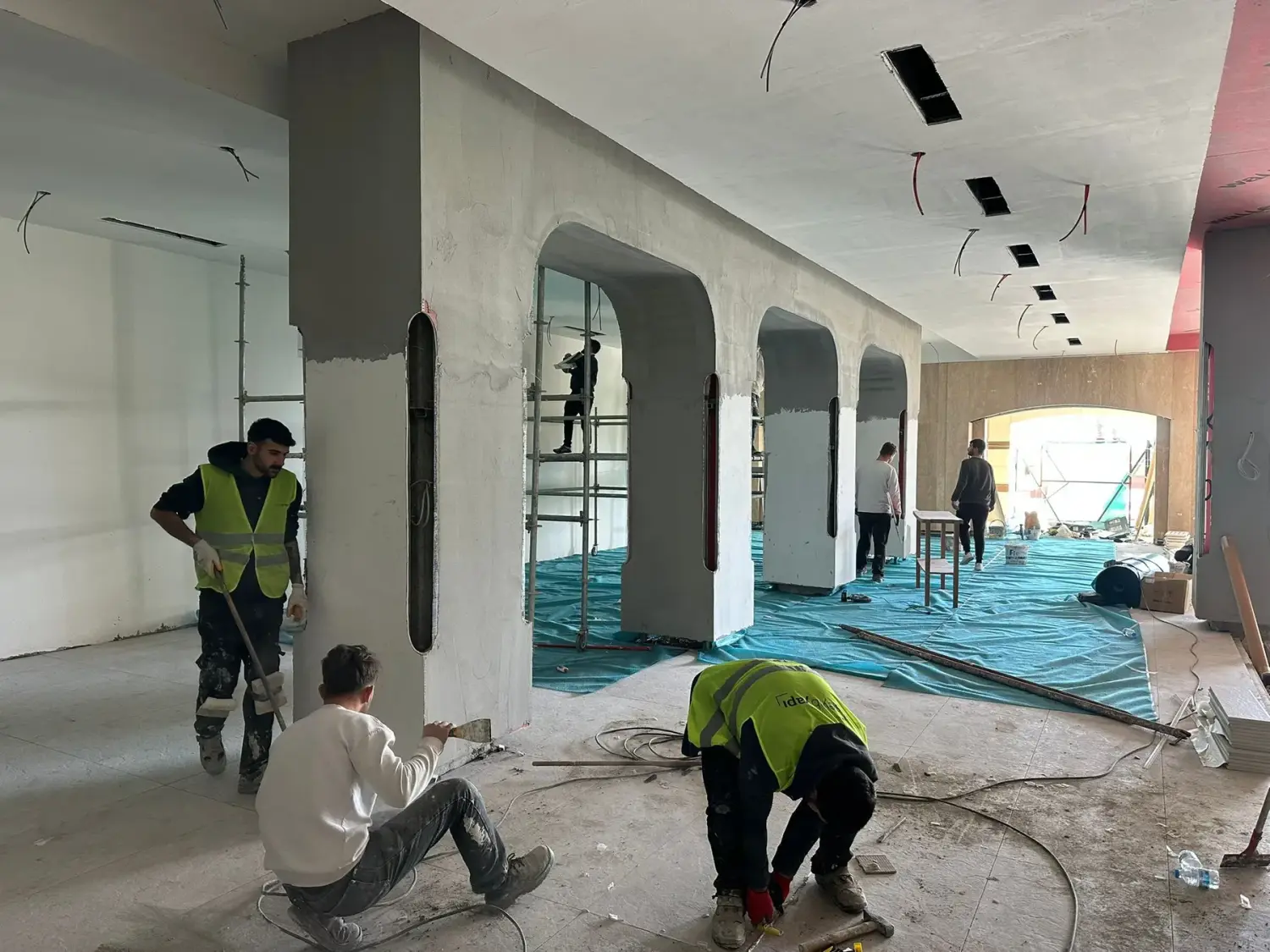
Concrete gains its durability properties over weeks as the cement hydrates, and that process needs the concrete to stay moist and within a reasonable temperature range while it happens. Curing is unglamorous - covering pours, keeping surfaces damp, protecting fresh concrete from wind and direct sun - and it is the step most tempted to be rushed when a schedule is under pressure.
Poorly cured concrete can meet its design strength in a cylinder test and still be significantly more permeable than it should be, because the surface layer - the part chloride has to get through first - dried out too fast. On our sites curing is scheduled and supervised as its own activity, not left to whoever is free that afternoon.
What this looks like across the four hotels
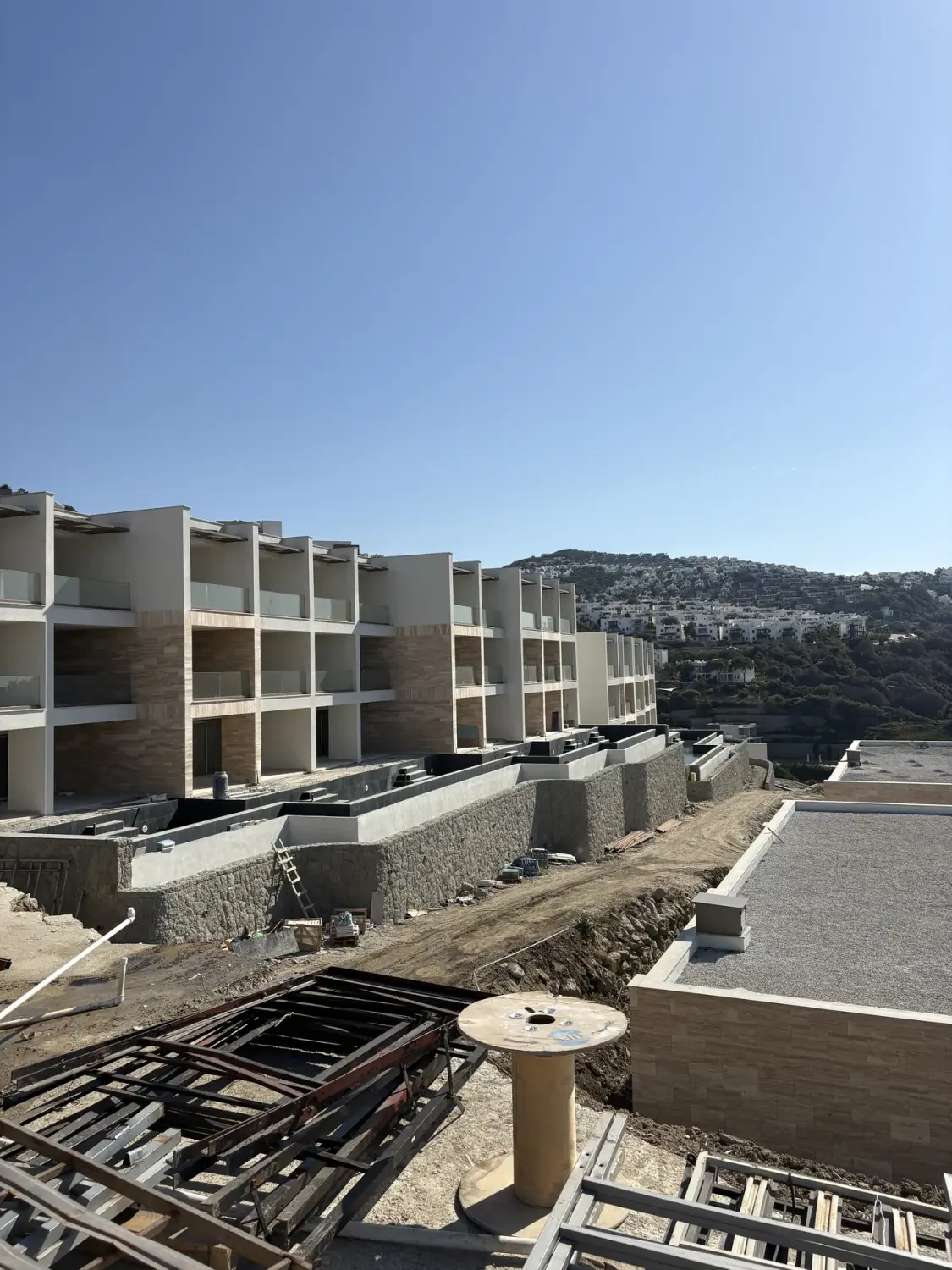
The exposure conditions differ across our coastal work. Kempinski Hotel The Dome in Belek and Sirene Bodrum sit close to open water with direct sea wind on several elevations, which called for higher cover and stricter mix control on the exposed frame. Kaya Palazzo and Mercure Konyaaltı have their own exposure profiles depending on setback from the shore and prevailing wind direction.
The principle is the same on every project: durability is an engineering decision, made element by element, not a single spec applied uniformly to the whole building. A structural engineer reviewing exposure zone by zone will specify differently for a seafront balustrade than for an inland-facing service core, and that differentiation is what keeps maintenance costs down decades later.
Frequently Asked Questions About Coastal Concrete Durability
How can I tell if a coastal building's concrete was built to resist salt?
You mostly cannot tell by looking at a finished building - the protections are inside the mix, the reinforcement, and the drawings. Ask for the structural engineer's exposure class and durability specification, and ask what changed between the inland and coastal elements of the design.
Does the direction a building faces really change the risk?
Yes. Elevations facing the prevailing sea wind take a heavier chloride load than sheltered or landward faces, and shaded, slow-drying surfaces are generally more vulnerable than surfaces that dry quickly after rain or spray. Good design accounts for this orientation by orientation, not as a single blanket rule.
Can existing concrete damage from salt be repaired, or does it need full replacement?
Localised spalling can be cut out, the corroded steel treated or replaced, and the section repaired with a compatible repair mortar, and this is common maintenance work on older coastal buildings. Widespread chloride contamination throughout the cover zone is a different problem and may call for more significant structural intervention, decided after inspection and testing.
Does using corrosion-resistant rebar mean I don't need good concrete quality?
No. Coated or resistant reinforcement adds a second line of defence, but it does not replace the concrete's own resistance to chloride penetration. The two work together - concrete that keeps chloride out for longer, and steel that tolerates chloride for longer once it arrives.
Is this only relevant for buildings right on the beach?
No. Wind carries salt further inland than most people expect, and humidity does the rest of the work. Exposure is a spectrum from shoreline to several kilometres back, and a competent structural engineer assesses each site rather than assuming distance alone solves the problem.
None of this shows up on a finish schedule, and none of it is visible once the render goes on and the marble arrives. It sits inside the frame, decided during weeks of pours that most owners never watch, by an engineer's exposure calculations and a site team's discipline about cover, curing, and drainage detailing.
It is also the part of a coastal building that determines whether it is still sound in twenty years or already patching balustrades in five. The mix design, the cover depth, the curing regime, and the drainage details are specific to each site's exposure, and any credible figures for what a durability specification adds to a project follow a site assessment rather than a general answer.
If you are planning a build on the Antalya coastline and want to understand what a proper coastal durability specification looks like for your site, we are glad to walk through it with you.